January 2026 - In this interview, we speak to Neeraj Dhawan who is involved in a successful, multi-stakeholder, Smart Village project in India. This is an extension of the ‘smart cities’ concept that makes a broad portfolio of IoT enabled services accessible and affordable to smaller communities.
Q: Would you begin by introducing yourself to our readers?
ND: I am Neeraj Dhawan of INVAS Technologies in India. My career background is in applying technological developments and telecommunications technologies stretching over a period of 39 years in the telecommunications industry.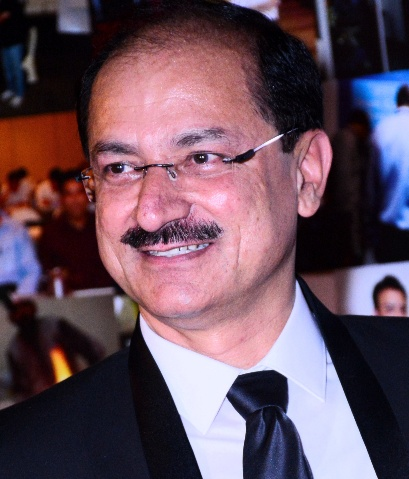
A lot of my work belongs in the systems integration and testing category. I did think of diversifying into manufacturing when the Indian government launched its ‘Made in India’ campaign around 2018-19. Then, around 2020, the Covid pandemic gave me some thinking time. That is when I decided to get more serious about the design and manufacture of IoT based systems for automation in various fields. I wanted to create something that would benefit society especially for rural areas and farming. I studied different technologies available, their suitability to meet application requirements, and started the development of hardware. Since then, IoT has become 5-10% of our business with strong growth in applications related to agriculture, fisheries, and surveillance.
Q: Would you now tell us a bit more about INVAS Technologies?
ND: INVAS Technologies was incorporated in 2006 by myself and one of my subordinates from a previous company where we worked together. Our focus initially was on Test and Measurement solutions for Optical Fiber Networks. With time INVAS diversified and now we have a complete range of products and our own manufacturing facility. We have a team of over fifty staff with a pan-India presence along with our own after sales service facilities in all metro cities in India. We also take turnkey projects for the deployment of network monitoring systems.
Our major customers include Jio, Airtel, Vodafone, BSNL, C-DOT, agencies in the Defence and Utility sector, system integrators, and Cable TV companies, among others. We have also tied up with CDOT to promote oneM2M technology. Our Smart Agriculture System complies to oneM2M and uses C-DOT CCSP platform.
Q: How did you learn about oneM2M and what attracted you to work with the standard?
ND: TSDSI (Telecommunications Standards Development Society, India) came into existence around 2014 and signalled India’s commitment to technical standards. We learnt about oneM2M after becoming TSDSI members. TSDSI provided us a platform to learn from other organisations and collaborate with right partners. We were attracted to oneM2M because of ease of adoption, interoperability with other interfaces and in-built security.
Q: What developments are driving the technology sector in India, and how are these influencing the IoT and related application sectors such as smart cities and smart grids?
Indian industry is growing fast; there is a definite need for automation in almost all sectors, and this requires strong capabilities in networks and IoT.
The government is alert to the fact that IoT systems from different manufacturers will introduce interoperability issues. That is one reason that TSDSI recommended the government to declare one standard for all IoT based system. That led the Telecommunication Engineering Centre (TEC), a technical arm of the Department of Telecommunications (DoT), to declare oneM2M as our National Standard for IoT
The public sector is actively involved in promoting standards and the private sector had to follow the same in order to comply with government directives. The Government has set up a National Trust Centre (NTC) to certify Internet-of-Things (IoT) devices, M2M (machine-to-machine) devices and applications to which all the M2M operators have to register their systems. Therefore, there is a direct influence of standardisation on Smart Cities, Smart Villages, Smart Grids projects.
Q: You spoke about working with C-DOT on IoT deployments. How did that collaboration begin and what kinds of projects have you worked on together?
ND: When we began developing IoT systems, we tried many different connectivity options – cellular, LoRa, and Wi-Fi. We also spoke to companies involved in manufacturing 5G systems. Delivering connectivity proved to be difficult, with additional costs involved, in the case of manufacturers, we faced challenges due to the requirements they imposed.
After becoming members of TSDSI, we at INVAS got introduced to oneM2M standards and their advantages. oneM2M helps with connectivity by making it easy to handle discovery, device management, and security, for example.
Through our shared interest in oneM2M, we tied up with C-DOT and integrated our smart devices with the Common Service Platform set up at C-DOT. Our Smart Agriculture system has already been commercialised and deployed at various locations. We have also developed a Smart Pond solution and are working on surveillance and forest fire alarm systems.
Q: What has been your experience of working with C-DOT?
ND: C-DOT is doing very well. Their team is very supportive and have helped us a lot during the process of on boarding on to their CCSP Platform. Our early experiences have shown a good fit with C-DOT. INVAS has inhouse design, development, and manufacturing facilities. Our marketing team is well spread and connected to various customers. We have a track record that we have sustained for the last 19 years. We have a good visibility of the business in coming years. Looking ahead, C-DOT needs to gear-up their marketing activities to promote oneM2M Standard and get more organisations connected to their platform.
Q: C-DOT is a partner in your Smart Village project. Would you describe the project in more detail?
ND: I mentioned that one of our focus areas in the in the agriculture sector. This is an area that is strongly influenced by State government policy. Our success in this area began with a request for proposals from the State of Maharashtra to develop a village-level proof of concept. We were pursuing the Tender opportunity as part of a consortium, the VOICE Consortium. It consists of twenty-five companies out of which fourteen participated in deployment activities. We introduced C-DOT as a possible contributor. C-DOT invested resources and marketing effort and helped our consortium to propose a stronger commercial and technical proposition.
The successful deployment at Satnavari village by VOICE Consortium members generated a lot of publicity and helped to establish the Smart and Intelligent Village concept. The villagers from Satnavari are happy with the deployment and are satisfied with maintenance of the deployed use cases. Many government representatives have visited the village during the last three months to witness the deployments at Satnavari. The reports by all these departments are very encouraging.
The Maharashtra Government has announced a plan for seventy-five additional villages and soon plans for expansion to add 3500 more villages. This project has put pressure on BBNL to provide optical fiber connectivity in rural Maharashtra as a priority. Along similar lines, other State Governments are also planning to set-up Smart Villages. We are already talking to Uttar Pradesh, Madya Pradesh, Telangana, and Sikkim to conduct proofs of concept.
Q: What are some of the use cases that the VOICE Consortium tried out?
ND: Our testing addressed a broad set of use cases. Some of the obvious ones that you would expect from Smart City experiences relate to water quality monitoring and water consumption tracking. Surveillance, as part of a public address system, is another.
To improve productivity, we worked on a smart pond application using DO (dissolved oxygen) sensors to track dissolved oxygen levels in fishery ponds. There were less obvious use cases. One addressed education with in-classroom screens to enable interactive lessons. Another is the concept of a medical ATM which is an extension of counter medical services to handle preliminary consultations.
C-DOT provided an interactive dashboard for these applications. It allows a user to click on a use case and to dive into each application. I should point out that three companies are currently using oneM2M to integrate data from different sensors and applications. Others are talking to C-DOT as they are considering oneM2M adoption. In the long term, standardization will improve operational consistency and new application opportunities where use cases overlap.
Q: Where do you see the IoT market heading in the coming years?
ND: We are confident that the IoT market is bound to grow as more and more use cases are created. Many startups are coming up with new ideas; with assistance from the Government, they are getting support and exposure to new opportunities.
We are working with a lot of different organizations to explore IoT opportunities, including some large systems integrators. We get a lot of foreign visitors coming to see our sites. As an example, there has been interest from Indonesia around the problem of crop damage caused by birds and wild animals. A solution will involve a combination of IoT hardware, platforms, and the kind of experience we have acquired through our deployment work.
Q: Where can readers learn more about your projects and use of oneM2M?
There are many reports in regional newspapers in different languages. National dailies in India have also published reports about Satnavari’s Smart and Intelligent Village deployment.
Readers can also look as SMARTKHETI which is a web site that demonstrates several use cases and testimonials from happy farmers.
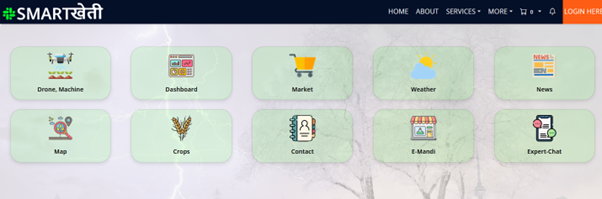
Q: Are there any other observations you wish to add on topics we did not cover above?
ND: Once you build a few applications, then you start to see new opportunities to apply IoT data. In farming for example, once you have a connected machine, it becomes possible to create value added services such as rental services for drones or other farm machinery. We can use crop data to share market pricing information with small farmers and to help them analyse investment and profit data over multiple crop cycles. We can also link geographic location data to identity information (India’s Adhaar system) and banking details so that a farmer is fully prepared when going to a bank to apply for a loan.
