
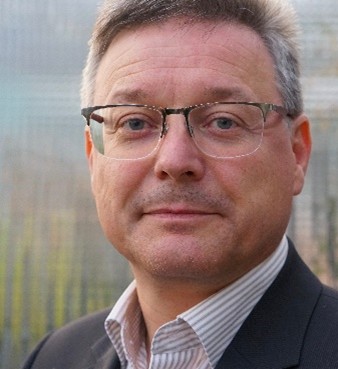
December 2025 - In this interview, Roland Hechwartner summarizes the latest developments from oneM2M’s 72nd Technical Plenary. In addition to chairing oneM2M’s Technical Plenary (TP), Roland is responsible for the coordination of the overall management of the technical work within the TP and its Working Groups (WGs). He is also a representative of Deutsche Telekom (DT).
Q: Would you begin with an overview of the key developments at TP#72?
RH: Thanks to several international collaboration efforts, TP72 took place in Malaysia which was a new country venue for oneM2M and a sign of oneM2M’s global appeal. We are grateful to the event hosts: Malaysian Technical Standards Forum Bhd (MTSFB), S. Korea’s Telecommunications Technology Association (TTA), and the Korea Electronics Technology Institute (KETI). The event was also supported by the INDICO Global project, which is funded by the European Union and works to shape the intersection of digital transformation and global standards.
oneM2M delegates and representatives from Malaysia’s IoT sector met at the Imperial Lexis Hotel in Kuala Lumpur, Malaysia. The TP and WG meetings ran over the period from November 10th to 14th, 2025. We included an Industry Day work session on November 12th, which is one way in which we disseminate knowledge about open standards and engage with local industry about their IoT needs.
Q: Having seen photos from the event, there were strong level of attendance at the Industry Day? What can you tell us about the discussion agenda?
RH: Yes, there was a strong level of attendance by the Malaysian Industry and well organised event thanks to MTSFB’s efforts. The agenda was split in two main sessions one about oneM2M and the second led by Malaysian Industry representatives.
The workshop followed a comprehensive agenda focusing on the oneM2M IoT standard. We spoke about its applications, and how to leverage and drive innovation in the IoT ecosystem, particularly in Malaysia. Below is a summary of the key activities, beginning with opening remarks from:
- Roland Hechwartner, oneM2M Technical Plenary Chair; Deutsche Telekom.
- Daejung KIM Vice President TTA (via online participation).
- Marcello Pagnozzi, Director of the Standards Development Center, ETSI
- Normarinee (Rinee) Mohd Nor, CEO of the Malaysian Technical Standards Forum Bhd (MTSFB).
We then moved to the oneM2M session and covered the following topics:
- Overview of oneM2M Standard by Roland Hechwartner, oneM2M TP Chair, highlighted the scope, principles, and significance of oneM2M in the IoT industry.
- SeungMyeong Jeong, oneM2M SDS WG Vice-chairman, (KETI), outlined the resources available to developers, ranging from open-source tools to hackathons.
- There followed a presentation entitled, “oneM2M-based IoT System Utilization” from Gi Eun Kim of N2M which discussed the implementation of oneM2M within IoT solutions.
- Finaly, Miguel Angel Reina Ortega (ETSI) led a session to showcase the processes and frameworks for oneM2M testing and certification.
We closed the morning discussions with a Kahoot Session. This was an engaging and interactive quiz on workshop topics to test participants' understanding.
After lunch, there followed the dedicated Malaysia session which concentrated on the potential to leverage oneM2M for Malaysia's IoT ecosystem. Presenters covered the following topics:
- Driving oneM2M Standards Adoption: Unlocking Opportunities in Malaysia’s IoT Ecosystem by Dr Gopinath Rao Sinniah, MTSFB IoT WG Chair.
- Empowering Smart Cities through oneM2M: The Role of Smart Integrated Poles by Syamsul Bahri, CCO, Colla Connecting Edge.
- From Sensors to Services: Accelerating Business Growth through IoT and AI Technology by James Lai, Chair, MyIoTA
- IoT Protocols and Architecture: Enabling Scalable Managed Connectivity by Kelvin Lim, CelcomDigi.
Q: What was your sense of the discussions that took place during the Industry Day session?
RH: There were a lot of informal discussions among attendees. I should add that there was a closing panel discussion on the day. This was moderated by Bobby Varanasi and involved experts from oneM2M (Roland Hechwartner and SeungMyeong) in discussion with representatives from Malaysia (Dr Gopinath Rao Sinniah and James Lai). The focus of the discussion was on the future of the oneM2M standard and its role in enabling IoT innovations in the southeast Asian market. This was a good topic to pick as there were many questions from the audience.
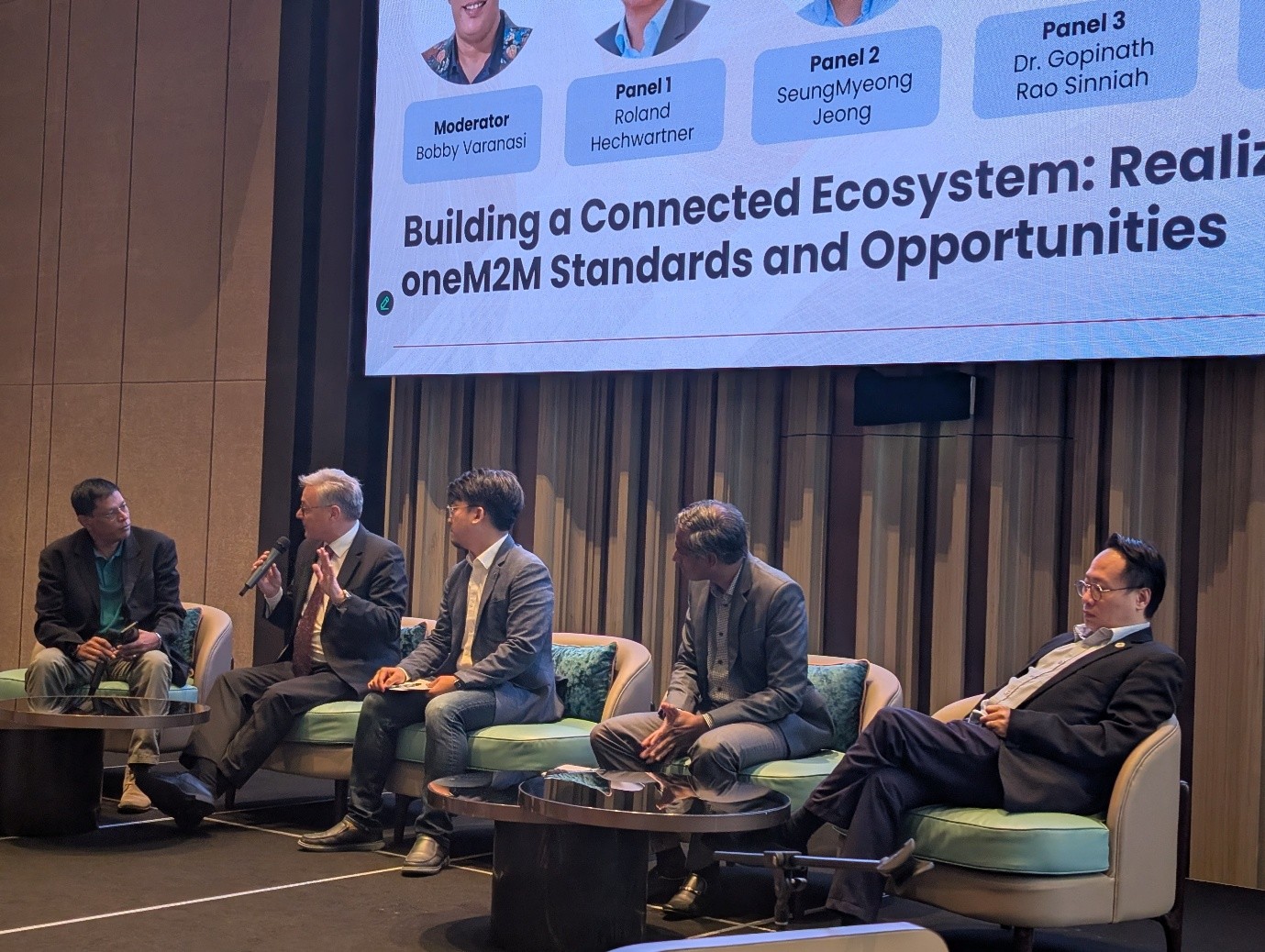
Overall, the TP meeting as well as the event provided valuable insights and tools for stakeholders, developers, and businesses. There was considerable interest in advancing IoT adoption and leveraging the oneM2M standard in Malaysia. Looking at the larger Southeast Asian market, there are promising opportunities to create scalable, interoperable, and innovative solutions. MTFSB has expressed strong interest in future collaboration on IoT with oneM2M as well as with the SDOs in attendance i.e. ETSI, TTA and TSDSI.
Q: Let us turn to the Technical Plenary sessions. What were the key developments during Working Group (WG) meetings?
RH: In addition to the three WG activities, we spent some time on collaborations involving oneM2M and on the timelines for Release 5 and 6 activities. For the first of these, we heard from Joachim Koss who is the ESTIMED Project Lead. ESTIMED is an ETSI project, going under the Specialist Task Force 685 title, which is part funded by the European Commission and the European Free Trade Association (EU/EFTA). ESTIMED’s collaborative aspect is to bring together ETSI’s Multi-access Edge Computing (MEC) and oneM2M standards. The aim is to enable standardized IoT deployments for advanced systems, both technically and in terms of developer outreach initiatives.
Joachim presented a progress report and explained that there is still a lot of work to be carried out to produce key deliverables, teaching materials, software and other tools that are included in the project scope. Joachim provided a good overview of the 3-year project in an interview for oneM2M.
oneM2M ‘s Technical Report on Features for oneM2M and MEC deployment scenarios (TR-0080 and TR-0077) are part of this project. oneM2M has adapted the timeline of Release 6 to align with the deadlines of this project. At this meeting, delegates approved the TR-0080 document.
Q: ESTIMED organized a short hackathon a few weeks back. Was this event discussed at TP72?
RH: Hackathons are an important part in the process of standardization and should be an integral part of the process. They also show how standardization work can map into the real world. To answer your question, Joachim did provide a second report on post-hackathon findings.
The hackathon itself took place via remote participation over the period from October 28 – 30, 2025. Its goal was to explore innovative use cases demonstrating interworking between oneM2M and MEC standards, advancing IoT-Edge integration. Congratulations were expressed to the winners of this Hackathon:
- 1st Team “Scuola Superiore Sant'Anna (SSSUP)”
- 2nd Team xFlow Research Inc.
- 3rd Team Sejong University - SESLab
- 4th FSCOM
- 5th Green Box
In closing, Joachim extended an invitation for additional participants from oneM2M and India. They would be very welcome to join the next hackathon which is scheduled for October 2026 and which will run over a period of several weeks.
We also held a brief discussion on the status of another ongoing hackathon events. This is the 2025 oneM2M International Hackathon that has featured in S. Korea for several years. KETI, TTA and Sejong University are running this event following in the footsteps of the 2024 event. The Award Ceremony is scheduled for late November in conjunction with an AIoT conference in South Korea (i.e. on 28th November 2025, COEX at 16:30 KST).
Q: It seems that ESTIMED developments will make useful contributions to oneM2M’s Release timetable. What can you say about Releases 5 and 6?
RH: Following our internal discussions, oneM2M members affirmed the following timelines for oneM2M Releases 5 and 6. Release 5 is currently being finalized, and we have set a target date of Q2 2027 to finalize Release 6. Based on this, all Release 6 deliverables should be ready for publication by the oneM2M Partners in September 2027. This means that we allow for new normative requirements until TP#73, which is in Q1 2026.
Q: Among the activities in Malaysia, what progress would you highlight from the oneM2M Working Groups?
RH: The Requirements & Domain Models (RDM) Working Group was chaired by Massimo Vanetti (SBS). The WG made progress on the work item on Enablement of IoT in the metaverse. There was also an agreement on new requirements to improve support scenarios of swarm computing and service continuity in edge deployments. These items were integrated into the TS-0002 V5.5.0 “oneM2M Requirements”. The RDM WG’s focus is now on Release 6.
Peter Niblett (Exacta) chaired the System Design & Security (SDS) working group which made progress on WI-0120 on Edge Deployment using ETSI MEC. Contributions to the TR-0080 have been completed and work on TR-0077 is being continued. There was also progress on WI-0105, which deals with AI enablement, and on WI-0122, which focuses on oneM2M interworking with Agentic AI.
Bob Flynn (Exacta), who travelled from the USA, chaired the Testing & Developers Ecosystem (TDE) working group. They continued to progress and enhance the git process to modernize our standardization workflows as we discussed in another interview.
Q: To close, what are the plans for oneM2M’s next Technical Plenary?
RH: The TP#73 meeting, covering TP meetings, WG meetings and a Workshop will be hosted by ETSI at their premises from January 19-23, 2026.
