
July 2026
In this interview, we speak to Andrea Ortiz (AO) who is an Assistant Professor at the Technical University of Vienna. The main topic of discussion is a recently awarded project on IoT in the 6G era. Andrea is the project coordinator, overseeing a team of ten participating organizations from across Europe.
Q: Would you begin by telling us about yourself?
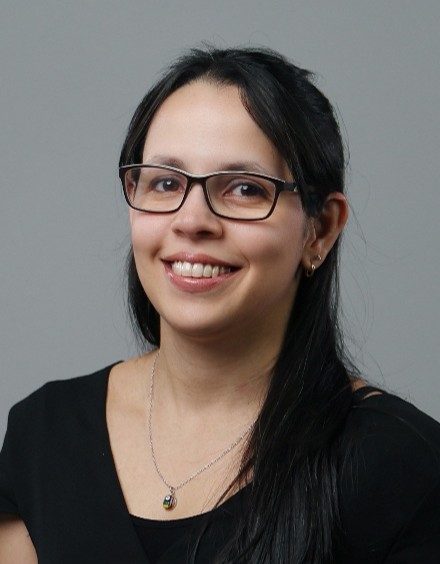
AO: I am originally from Colombia, which is where I completed my Bachelor’s degree in Electronic Engineering. After that, I worked for a couple of years for a mobile operator, focusing on network planning and design. I then moved to Germany for my Master’s, PhD, and post-doctoral research.
Now, I am in Vienna for almost two years. I received funding from the WWTF funding agency, and the opportunity to build my own research group. That is how I gained an Assistant Professor position here at TU-Wien. My research group is called ASUCAR, a play on the Spanish word azúcar (sugar) and an acronym for sustainability, scalability, and resilience in wireless networks.
For my research interests, I focus on the lower layers of the wireless stack. It is not really the physical layer, but a little bit above. I deal with ideas about resource allocation, scheduling, and routing, mainly from the theoretical side.
I am interested in building models, which is to say mathematical models, in finding bounds, and working out how to explain things. I use a lot of machine learning, to solve problems and to deal with uncertainties because I do not have all the information. My approach is to look at a real system, then build a model out of it before exploring what optimization approaches can we take.
Q: And with part of TU-Wien are you affiliated?
AO: TU Wien is a public research university in Vienna, Austria. The university's teaching and research activities focus on engineering, computer science, and natural sciences. I am part of the Electrical Engineering and Information Technology faculty and specifically in the Institute of Telecommunications. As we are divided into research areas, mine is the wireless communication one.
Q: You recently won funding for the IoT Zero project. What is the project about?
AO: The idea behind the IoT Zero project is to study how we can design and enable ultra-low power communications and whether it is even possible to have zero energy IoT devices. We are not limiting our research to the device but considering the connectivity aspect. That means we want to have seamless connectivity between terrestrial and non-terrestrial networks. While that is the main motivation, we also need to think about deployment at scale, and the role of battery-powered devices. These two factors introduce a sustainability aspect we also consider, due to issues such as battery replacement and the effort involved in switching out old devices.
A key idea in the project is to focus on energy and its use. In the same way that we treat bandwidth, time, and power as resources, now we want to treat energy as a resource. As an example, is it feasible to plan a whole system and all communications treating energy as a design resource? This leads us to consider energy harvesting systems, so that we are not reliant solely on battery power but can also recharge the devices while they are in operation.
We plan to use asset tracking as our main use case. There will be devices inside a warehouse and others that are used throughout the supply chain. In this use case, for example, some IoT devices might harvest RF energy. If we succeed in developing an accurate model of the device, we can predict when there would be available energy at certain times of the year or even during the daytime hours. With such a predictive model, we can optimize time-dependent energy harvesting and communication strategies flexibly.
Q: What is the high-level approach for the project?
AO: The IoT Zero project has three pillars. The first one envisions a unified energy-aware architecture for IoT. The second pillar involves ultra-low power and secure communication across terrestrial and non-terrestrial networks. At the system level, we are asking questions like, “should I really send this packet now?” or “does it make sense to wake up a device and transmit data or, is it better to delay and save energy?”
The third pillar deals with event-driven sensing in relation to neuromorphic architectures. What that means is that an action occurs only when something happens, and when a piece of information is worth transmitting. Say that a sensor detects a change and that some other entity needs to be informed. Then and only then do we trigger the whole system. The neuromorphic aspect comes into play in how this sensing and processing is implemented. Instead of continuously sampling and processing data in a clock-driven way, we use event-driven, spike-based representations, where both sensing and computation happen only when there is meaningful activity. This allows the device to consume energy proportional to the actual information content, rather than operating continuously. In this sense, neuromorphic computing is mainly applied at the edge, directly on the device.
Our goal is to reach technology readiness level (TRL) 3 and 4. That corresponds to producing experimental proofs of concept, and having technology validated under laboratory conditions.
Q: This is a consortium project. What is the relationship with SNS-JU and other project participants?
AO: The European Smart Networks and Services Joint Undertaking (SNS JU) is a Public-Private Partnership. It funds research and innovation projects involving European stakeholders while promoting international cooperation on 6G initiatives. IoT Zero is a EUR3 million project that will run over a three-year period beginning in June 2026.
There are ten project participants in all, with two of them being different business units for a large commercial organization, Thales (France). There is a good mix of expertise and geographies represented in the consortium. On the academic side, we have TU-Wien (Austria), TU Delft (The Netherlands) and Slovak University of Technology in Bratislava (Slovakia) as well as IMDEA Networks (Spain) which is a research institute.
There are three SMEs in the group. The Italian firm, Qascom specializes in secure positioning and security solutions for IoT systems. From Slovakia, Sensoneo focuses on IoT solutions, particularly in smart waste management and real-world sensing deployments, and Lasting Software from Romania specializes in software and system integration. For this project, they contribute to the TN–NTN experimentation activities.
There are two large organizations involved in the project. LMT which is one of the main mobile network operators in Latvia. The second organization is Thales (France), and it will participate in the project through two divisions, Thales CDI, focusing on secure IoT devices and embedded solutions, and Thales SIX, focusing on advanced communication systems, including satellite and non-terrestrial networks.
Q: What IoT challenges do you foresee in the IoT Zero project and what is the link with 6G??
AO: The central challenge is to think about energy as a resource. How do you plan for energy, how do you schedule energy, and how do you allocate energy?
Next, we need to think about predictive modelling as a tool to optimize connectivity, communications, and time, for example by anticipating energy availability and adapting system behaviour accordingly. We also need to think in terms of dispersed components and ways to distribute energy harvesting and communications loading. The connection with 6G is about massively increasing the number of connected and constrained devices while ensuring ultra-low-power, secure, and event-driven operation at scale.
Q: What deliverables is the project team targeting?
AO: The project is due to start in June 2026. Our first step is to develop a system architecture and a set of key performance indicators (KPIs). For these, we will build off requirements that our industry partners provided. These will then feed into setting appropriate project goals. The aim is to formulate an energy model and to come up with a digital twin representation.
Then, there will be two project streams running in parallel, one on communications and the other on sensing. Among many issues, the communications part will study how far it is possible to go in using backscatter and asynchronous, energy-aware protocols to optimize the energy budget, including connectivity across terrestrial and non-terrestrial networks.
When it comes to sensing, this is not just about taking sensor readings or tracking assets. The new part is the energy dimension. As I noted earlier, we need to think about how to manage energy as a resource. We also need to look ahead at machine learning which consumes a lot of compute resources. For the future, can we come up with simpler architecture, potentially based on neuromorphic concepts.
As the two work streams come together, they will feed into the development of a secure, near-zero-energy proof of concept for asset tracking.
Q: When will project outputs become available and will they be open outside the project team?
AO: SNS-JU encourages all projects to share their results as much as possible to help build the European eco-system so there is a definite intention to share our work more widely. There is already a project web site where people can learn more about the issues, approach, and partners. Readers can find more information here. In addition, the project will contribute to standardization activities and share results such as models, software, and proof-of-concept outcomes with the wider community.
Q: What impact(s) are you hoping to have on the IoT industry?
AO: We hope to make breakthroughs in new areas related to massive and sustainable IoT. This will involve a family of techniques to handle energy as a resource and to enable near-zero-energy and battery-less IoT devices. Our industry partners who are active in standardization bodies intend to contribute to ultra-low-powered IoT standardization. As a researcher, I can say that there will be several academic papers. The group will also provide access to software developed for the proof-of-concept.
I would add that we are already having an impact on the industry. SNS-JU wants projects that integrate with one another. We have opened discussions with another SNS-JU project team that launched their IoT project a year ago. They are focused on hardware aspects of ultra-low-powered IoT devices. Our projects are complementary because we focus on the software and communications aspects, while also integrating device-level innovations such as sensing and energy-aware operation.
